
Essential Took Kits for the CDL Driver
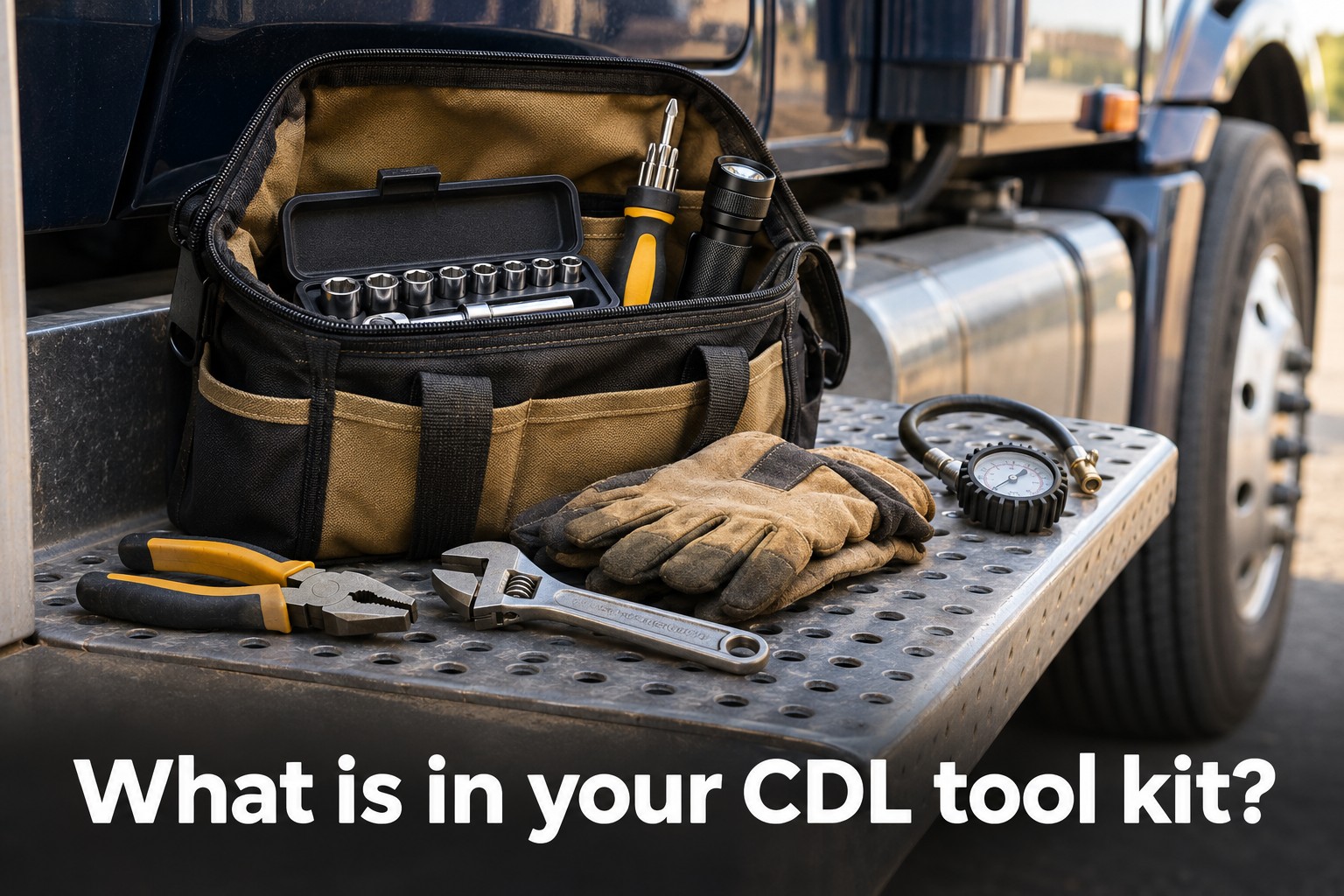
Essential Took Kits for the CDL Driver
"If I only had a screwdriver!"
Whether you're a new CDL holder or an experienced driver, having the right tools in your truck can make life on the road a lot easier. A loose mud flap, a hard-to-reach light, or a minor problem inside the cab can become an unnecessary delay if you aren't prepared. You don't need to carry a full mechanic's toolbox, but a few dependable tools can help you handle small issues, complete inspections, and stay organized. Here are some practical items worth considering for your truck.
1. Start With a Basic Tool Kit
You don't need to spend a fortune or buy everything at once. Start with tools that are useful for everyday adjustments and minor issues.
- Screwdrivers: A multi-bit screwdriver with Phillips, flathead, and Torx bits
- Pliers: Standard, needle-nose, and locking pliers
- Adjustable wrench: Useful for minor tightening and adjustments
- Socket and wrench set: A compact set with commonly used sizes
- Hammer or rubber mallet: Helpful for stubborn pins or minor adjustments when appropriate
- Flashlight and headlamp: Keep one within reach, along with spare batteries or a charging cable
- Tape and zip ties: Duct tape, electrical tape, and heavy-duty zip ties to help with temporary, non-safety-critical fixes
One practical suggestion from experienced drivers is to buy a modest starter kit and add items when you encounter a situation where a particular tool would have helped. Your needs will depend on whether you drive local, regional, or OTR, the equipment you operate, and what your employer provides.
2. Include Roadside and Inspection Supplies
Some of the most useful items aren't traditional tools. Consider keeping the following in your cab:
- Tire pressure gauge
- Work gloves and safety glasses
- Reflective safety vest
- Small first-aid kit
- Shop towels or cleaning rags
- Extra flashlight
- Spare gladhand seals, if appropriate for your equipment and company policy
- Extra charging cable and portable phone charger
FMCSA requires specific emergency equipment on commercial trucks, that are not optional, including: a properly rated and securely mounted fire extinguisher and either three reflective emergency triangles or the required number of fusees. Certain hazardous-materials operations have different requirements and restrictions.
3. Know When Not to Make the Repair
Having tools doesn't mean you should attempt every repair yourself. Problems involving brakes, tires, wheels, steering, air systems, or other safety-critical components should be handled by qualified personnel. Never use a temporary fix to put an unsafe truck back on the road.
FMCSA requires drivers to be satisfied that key vehicle components, including brakes, tires, steering, lights, coupling devices, and emergency equipment, are in good working order before operating the vehicle. If something isn't right, report it and follow your carrier's maintenance procedures.
The federal requirements apply nationwide, although employers, carriers, and particular equipment types may have additional requirements.
At CDL Academy, we don’t just prepare you to pass the exam. Our course is designed to prepare you for real-world situations—interviews, inspections, roadside stops, crashes, and the decisions and driving techniques that protect your livelihood.