How to Prepare for a Job Search as a New CDL Driver
How to Prepare for a Job Search as a New CDL Driver
You've studied hard, you've practiced hard, and now you finally have your CDL! Your next step is turning your new license into your first driving job. For many new CDL drivers, that means knowing where to look, preparing your paperwork, and being realistic about starting at an entry-level position.
1. Know What Employers Are Looking For
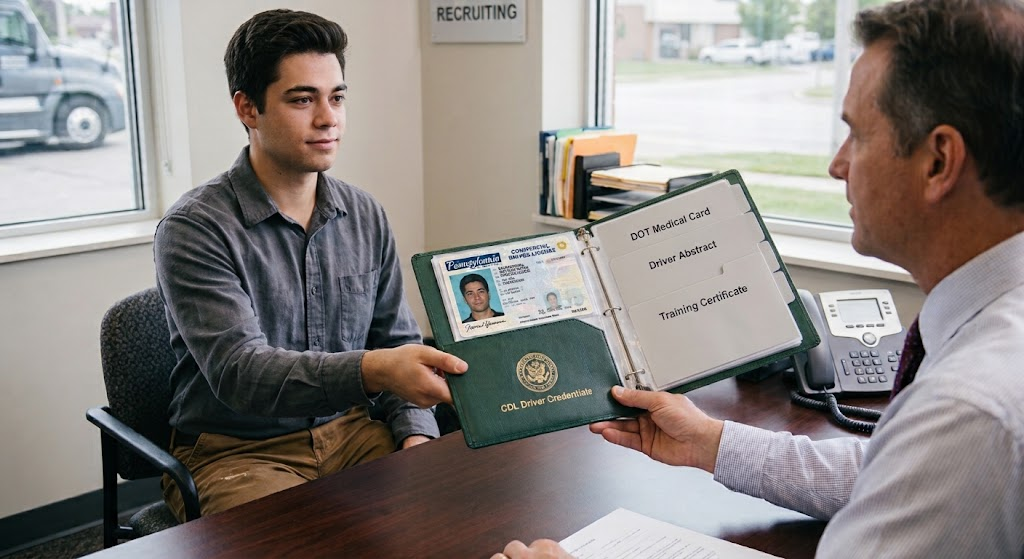
Before applying, make sure you have the basics ready, including your CDL, medical certification (if required), endorsements, driving record, and proof of training. For new Class A or Class B CDL applicants, applicable Entry-Level Driver Training (ELDT) must be completed before taking the skills test. It’s important to note that your state may also have additional requirements.
If you earned your CDL through federally required ELDT, your training provider reports your completion to FMCSA's Training Provider Registry (TPR).
2. Apply Where New Drivers Can Actually Get Started
Don't limit your search to the biggest trucking companies. It can also be beneficial to look at local, regional, over-the-road (OTR), private-fleet, and specialized employers that hire drivers with limited experience. Successful new drivers frequently recommend applying consistently to many companies, talking directly with recruiters, using connections made through CDL school, and being willing to start in an entry-level position.
Don't be discouraged if your first job isn't your dream job. Your first goal may simply be to gain safe, verifiable experience. More opportunities can open up as your experience grows.
3. Make Your Application Work for You
New drivers often hear, "You need experience to get experience." Don't let that mindset discourage you. Your resume doesn't need to be complicated. Clearly list your CDL class, endorsements, training, previous work experience, safety-related experience, and any equipment or driving experience you have. If you don't have professional truck-driving experience, highlight transferable skills and qualities such as reliability, customer service, equipment operation, safety awareness, punctuality, and the ability to work independently.
Federal regulations require motor carriers to investigate a prospective driver's driving and employment history, and to conduct a pre-employment query of the FMCSA Drug & Alcohol Clearinghouse before hiring.
4. Be Ready for the Interview
It's always important to do your homework before the interview. This includes making sure you understand the type of freight, equipment, routes, schedule, pay structure, training period, and home-time expectations at the company you are applying for. Once at the interview, don't be afraid to ask questions. A job that pays well on paper may not be a good fit if the schedule or training arrangement doesn't work for you.
Be prepared to discuss your approach to safety, handling difficult situations, managing tight schedules, inspecting vehicles, managing fatigue, and following regulations.
At CDL Academy, we don’t just prepare you to pass the exam. Our course is designed to prepare you for real-world situations—interviews, inspections, roadside stops, crashes, and the decisions and driving techniques that protect your livelihood.