
What Should Drivers Expect at an Agricultural Stop?
What is the Purpose of Agricultural Inspection Stations?
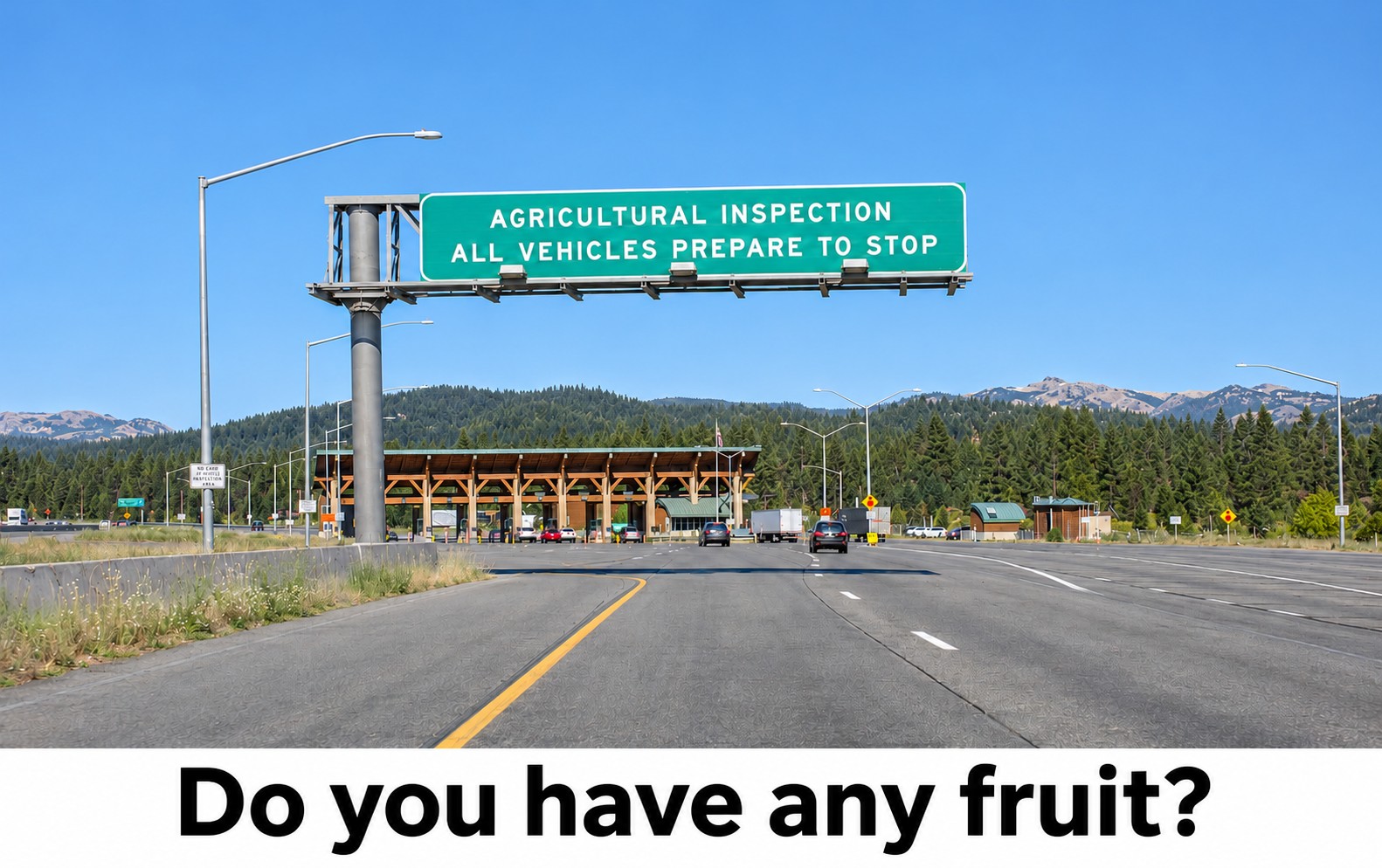
You’re driving into California when traffic slows toward a row of booths beneath a canopy. It looks like a toll plaza, and you instinctively reach for your wallet. But the person at the window wants to know whether you’re carrying fruits, vegetables or plants. What? You’ve reached an agricultural inspection station.
California and Florida use these checkpoints to protect agriculture and natural resources from pests and diseases traveling with people and cargo. A piece of fruit, a potted plant, or a load of firewood can carry unwanted insects or disease. The stations help intercept those threats before they spread.
California
In California, passenger cars are part of the screening process. The state’s Border Protection Stations screen commercial and private vehicles entering California. As you approach, slow down, follow lane signs and stop unless an inspector directs you through. Being in a personal car does not automatically exempt you. California Department of Food and Agriculture
What should you do? Be ready to explain where you’ve traveled and declare fruits, vegetables, plants and other agricultural materials, including hay and firewood. Keep those items accessible. Inspectors assess risk using factors such as your route, vehicle type and the season; some vehicles receive a brief screening, while others need a closer inspection. Restricted or infested items may be denied entry.
California’s stations serve entering traffic; the state does not operate corresponding agricultural checkpoints for vehicles leaving.
Florida
In Florida, the stopping requirement depends largely on your vehicle and load. Stations operate along major highways at entry and exit points. Their work includes preventing plant and animal pests and diseases, checking agricultural shipments and protecting the food supply from unsafe or improperly stored products.
Florida directs trucks, rental moving trucks, vans and nonexempt trailers to stop, along with vehicles carrying agricultural, horticultural or livestock products. An empty moving truck still belongs in the inspection lane. Ordinary private passenger cars without trailers generally may bypass. Travel trailers, camping vehicles, van conversions and motor homes are also listed as exempt. Pickups may bypass only when they carry no agricultural, horticultural or livestock products and officers have visible access to the entire cargo area. A car towing a utility trailer should stop; the travel-trailer exemption is different. Follow posted directions and officers’ signals.
What should you do? If you must stop in Florida, enter the inspection area, identify your cargo and have relevant shipping or animal-health documents ready. Drivers of nonexempt vehicles must stop even when they believe their load has nothing agricultural in it.
Summary
For travelers, the practical difference is straightforward: approaching a California station in a family car means preparing for screening; approaching a Florida station means knowing whether your vehicle and cargo require a stop. In either state, watch the signs, slow down and follow the inspector’s directions.
At NHSA, our goal is to provide online driver education courses that equip all drivers with what they need to be safe drivers. Whether you are a teen seeking a learner’s permit, or an adult driver seeking a basic driver safety course, check us out online to see what courses are available in your state!